Discover how artificial intelligence and automation are transforming medical billing, improving claim accuracy, reducing denials, accelerating reimbursements, and helping healthcare providers deliver better patient care while maximizing revenue.
The Future of Medical Billing: How AI and Automation Are Transforming Healthcare Revenue Cycle Management
Healthcare organizations face increasing pressure to improve patient care while managing complex administrative responsibilities. One of the most demanding aspects of healthcare operations is medical billing. From insurance verification and coding to claim submission and payment reconciliation, every stage requires accuracy, compliance, and efficiency.
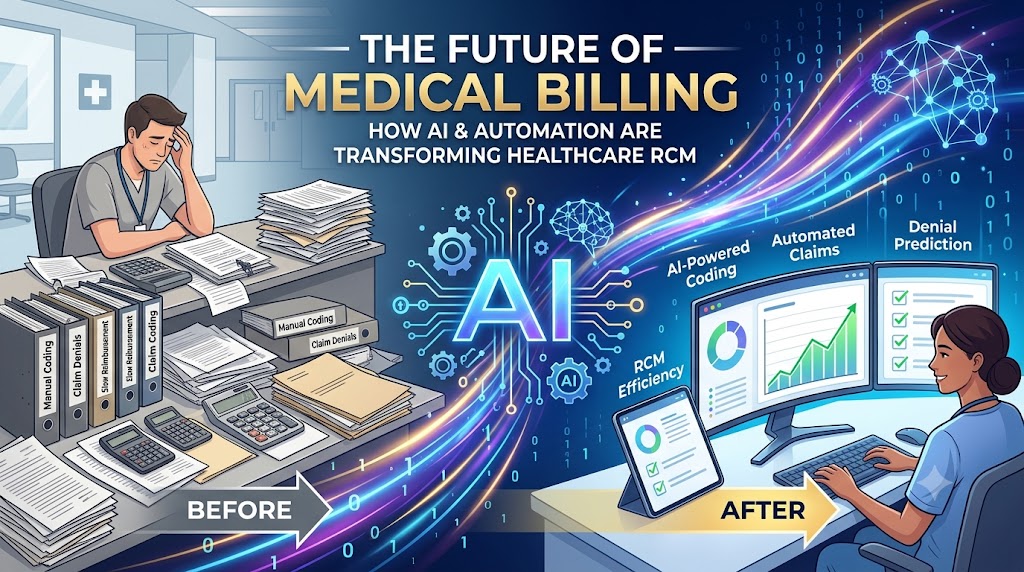
As regulations evolve and patient expectations continue to rise, traditional billing processes are no longer enough. Artificial Intelligence (AI) and automation are transforming Revenue Cycle Management (RCM), enabling healthcare providers to streamline operations, reduce costly errors, and improve financial performance. In this article, we'll explore how modern technology is reshaping medical billing and why healthcare organizations should embrace digital transformation.
Understanding Revenue Cycle Management
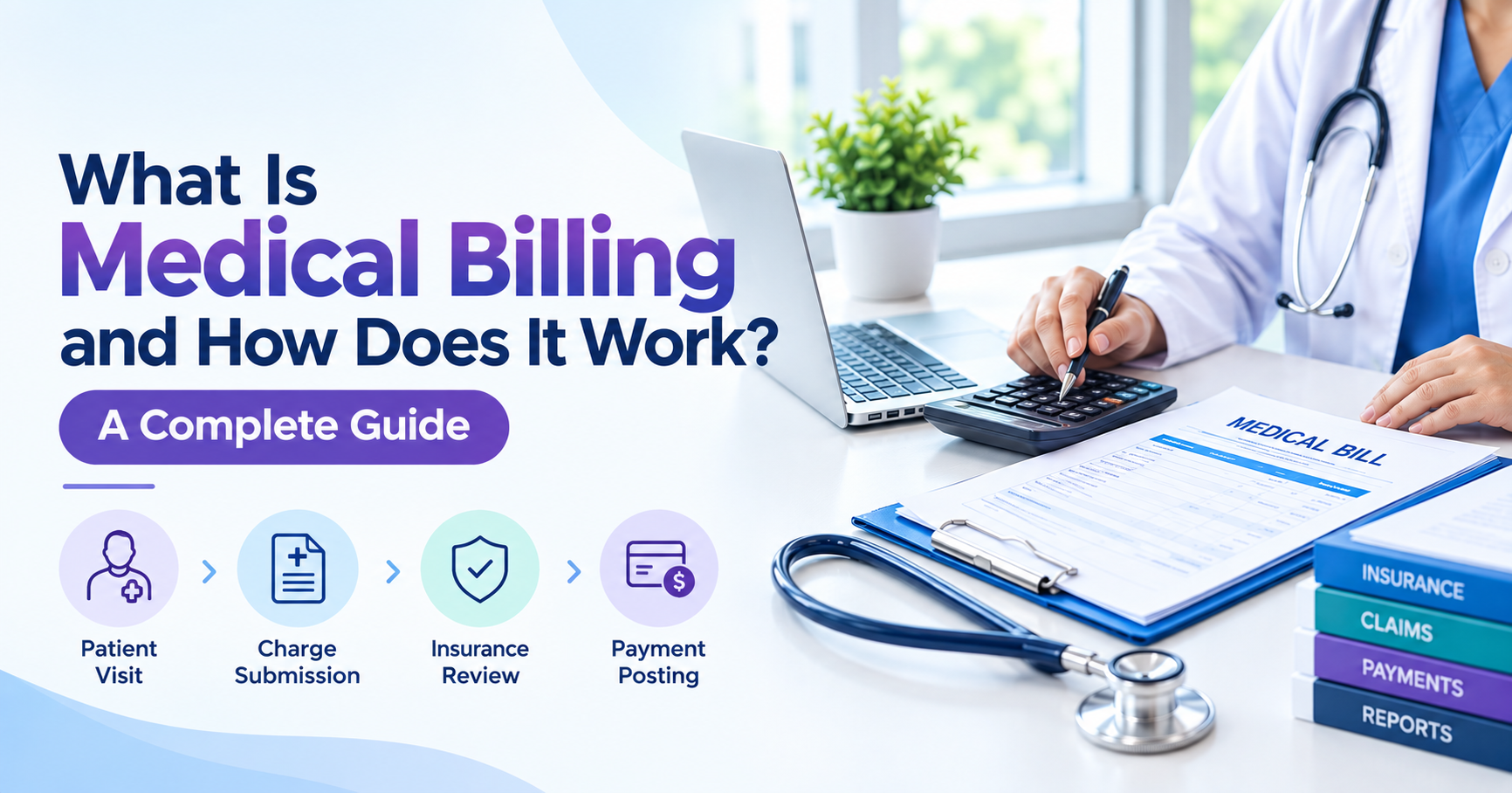
Revenue Cycle Management (RCM) refers to the complete financial process that begins when a patient schedules an appointment and ends when the provider receives full payment for services rendered.
The revenue cycle typically includes:
- Patient registration
- Insurance eligibility verification
- Medical coding
- Charge capture
- Claim submission
- Claim tracking
- Payment posting
- Denial management
- Appeals
- Patient billing
- Financial reporting
Each stage presents opportunities for errors that can delay payments or result in denied claims.
Challenges with Traditional Medical Billing
Many healthcare practices still rely on manual workflows or outdated billing systems. These approaches often create several operational challenges.
High Claim Denial Rates
Incorrect coding, incomplete documentation, missing patient information, or insurance eligibility issues frequently result in denied claims. Every denied claim requires additional administrative work and delays reimbursement.
Time-Consuming Administrative Tasks
Medical staff often spend countless hours entering patient information, verifying insurance benefits, updating records, and tracking claims instead of focusing on patient care.
Human Error
Even experienced billing specialists can make mistakes. Small errors in CPT codes, ICD-10 diagnoses, modifiers, or patient demographics can significantly impact revenue.
Compliance Risks
Healthcare regulations continue to evolve. Staying compliant with HIPAA requirements, payer policies, and coding updates requires continuous monitoring and staff training.
Cash Flow Delays
Delayed reimbursements affect operational stability and may limit a practice's ability to invest in new equipment, staff, or patient services.
How AI is Revolutionizing Medical Billing
Artificial Intelligence is changing how healthcare organizations manage their billing operations by introducing intelligent automation and predictive analytics.
Automated Eligibility Verification
AI-powered systems can instantly verify patient insurance coverage before appointments. This reduces claim rejections caused by inactive insurance or incorrect policy information.
Benefits include:
- Faster patient check-in
- Reduced administrative workload
- Lower denial rates
- Improved patient satisfaction
Intelligent Medical Coding
AI-assisted coding solutions analyze clinical documentation and recommend accurate ICD-10, CPT, and HCPCS codes.
Advantages include:
- Greater coding accuracy
- Reduced coding time
- Improved compliance
- Lower audit risk
Human coders still play an important role, but AI significantly accelerates their workflow.
Claim Scrubbing Before Submission
Modern billing software automatically reviews claims before submission to identify missing information, incorrect codes, duplicate claims, and payer-specific requirements.
This proactive validation greatly reduces first-pass claim rejection rates.
Predictive Denial Prevention
Machine learning algorithms analyze historical claim data to predict which claims are most likely to be denied.
Billing teams can resolve issues before submission instead of spending valuable time appealing denied claims later.
Automated Payment Posting
AI can automatically reconcile insurance payments, patient payments, and electronic remittance advice (ERA), minimizing manual data entry and improving financial accuracy.
Smart Follow-Up
Instead of manually tracking outstanding claims, intelligent systems prioritize unpaid accounts and recommend the most effective follow-up actions.
This improves collections while reducing administrative workload.
Benefits of Automation for Healthcare Providers
Healthcare organizations adopting automated billing solutions often experience measurable improvements.
Improved Accuracy
Automation reduces manual data entry and minimizes common billing mistakes.
Faster Reimbursements
Clean claims reach insurance companies faster, resulting in quicker payment cycles.
Reduced Administrative Costs
Less manual work means billing staff can focus on higher-value activities such as denial management and patient communication.
Better Compliance
Modern platforms continuously update coding libraries and regulatory requirements, helping organizations remain compliant.
Enhanced Patient Experience
Accurate billing, transparent statements, and faster insurance processing improve patient trust and satisfaction.
The Role of Analytics
Modern RCM platforms provide powerful dashboards that offer real-time insights into financial performance.
Healthcare administrators can monitor:
- Claim acceptance rates
- Days in Accounts Receivable (AR)
- Net collection rate
- Denial trends
- Revenue by provider
- Revenue by specialty
- Outstanding balances
- Payment turnaround times
These insights enable proactive decision-making and continuous operational improvement.
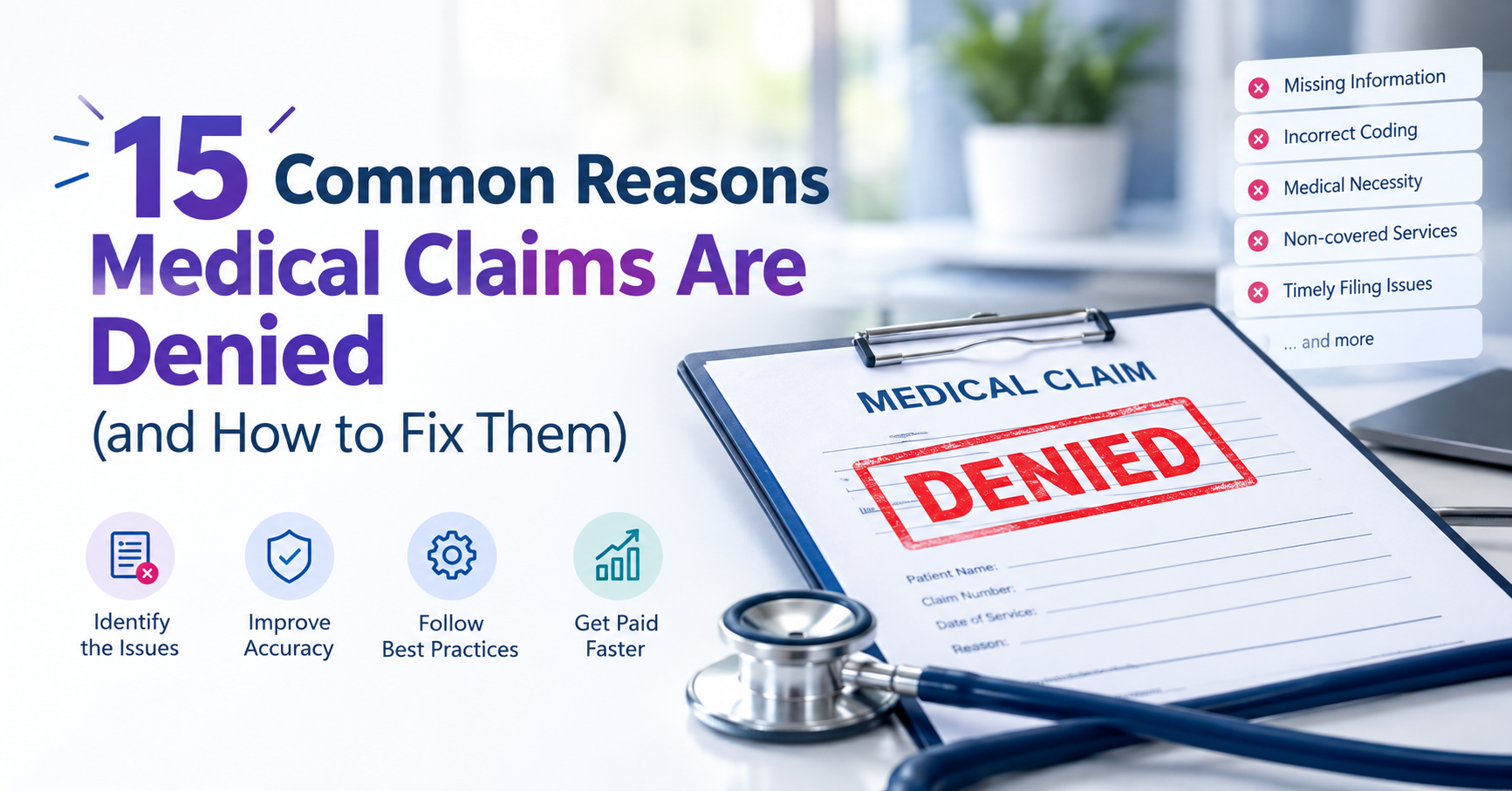
Common Causes of Claim Denials
Understanding why claims are denied helps practices improve billing efficiency.
Common reasons include:
- Incorrect patient demographics
- Invalid insurance information
- Missing authorization
- Incorrect diagnosis codes
- Incorrect procedure codes
- Duplicate claims
- Missing modifiers
- Incomplete documentation
- Timely filing issues
- Non-covered services
Automated validation tools help identify many of these issues before claims are submitted.
Why Small Practices Need Automation
Automation isn't just for hospitals and large healthcare systems.
Small and medium-sized practices can benefit from:
- Reduced staffing costs
- Improved cash flow
- Lower denial rates
- Better patient communication
- Simplified reporting
- Scalable operations
Cloud-based billing platforms have made advanced technology accessible to practices of every size.
Security and HIPAA Compliance
Medical billing involves handling sensitive patient information.
Modern billing platforms prioritize security through:
- Role-based access control
- Data encryption
- Secure backups
- Audit logs
- Multi-factor authentication
- HIPAA-compliant infrastructure
Maintaining strong cybersecurity practices protects both healthcare providers and patients.
The Future of AI in Healthcare Administration
Artificial Intelligence continues to evolve rapidly.
Future innovations may include:
- Voice-assisted clinical documentation
- Automated prior authorization processing
- Real-time coding recommendations
- Predictive reimbursement forecasting
- Intelligent patient communication
- AI-powered compliance monitoring
- Advanced fraud detection
- Personalized patient payment plans
These technologies will continue reducing administrative burden while improving operational efficiency.
Best Practices for Modern Medical Billing
Healthcare organizations looking to improve their revenue cycle should consider the following strategies:
- Verify insurance before every visit.
- Maintain accurate patient demographics.
- Submit clean claims promptly.
- Monitor denial trends regularly.
- Automate repetitive administrative tasks.
- Invest in ongoing staff education.
- Track key financial metrics.
- Perform regular compliance audits.
- Utilize analytics for strategic decision-making.
- Partner with experienced billing professionals when needed.
Final Thoughts
Medical billing has evolved far beyond simple claim submission. Today's healthcare organizations require intelligent, efficient, and scalable Revenue Cycle Management solutions capable of adapting to changing regulations and increasing administrative complexity.
Artificial Intelligence and automation are helping providers reduce denials, accelerate reimbursements, improve coding accuracy, and deliver a better experience for both staff and patients.
Organizations that embrace these technologies position themselves for stronger financial performance, improved operational efficiency, and ultimately better patient care. As healthcare continues to modernize, investing in advanced medical billing solutions is becoming less of a competitive advantage and more of a business necessity.
By combining experienced billing professionals with innovative technology, healthcare providers can build a more resilient, efficient, and patient-focused revenue cycle that supports long-term growth and success.
Gallery